Wheel Alignment Training at BATTLE-AXE Academy
The 50th BATTLE-AXE Academy: 3 days and 2 nights learning angles, diagnosis, non-destructive correction — and how to turn wheel alignment into workshop revenue.
What Is the BATTLE-AXE Academy?
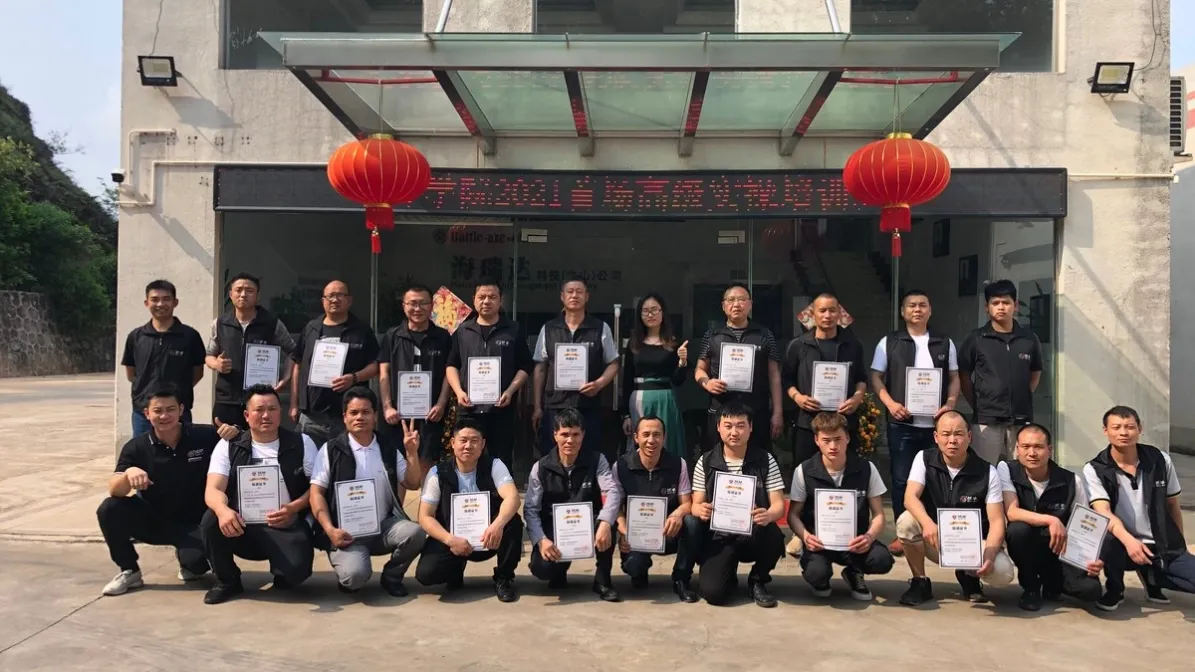
The BATTLE-AXE Academy has reached its 50th session. One session a month, 3 days and 2 nights each time, held at our factory in Zhongshan, Guangdong. The first session ran in 2021, and the Academy has run every month since — fifty sessions of teaching technicians how to do alignment properly, not just how to press buttons on a machine.
This is a hands-on wheel alignment training course. Theory happens in the classroom. Practice happens in the workshop, on real cars on the lift. The people in the room are mechanics from repair shops, owners of tyre shops, and technicians from auto assembly plants. Some come to learn wheel alignment from the ground up. Experienced technicians come to fix bad habits — and to learn how to turn alignment into a part of the business that actually pays.
A good aligner in untrained hands still gives bad results. The machine measures. The technician decides. That is why the Academy exists: the equipment is only half the job, and the other half is the person using it.
Fifty sessions also means the course itself has been refined fifty times. The instructors know exactly where students get stuck — usually at the same two places: reading the data, and trusting it enough to act on it. That is why the class is capped at 18 people. With a small group, the instructor sees every student work, and every student gets their hands on a car. Nobody sits at the back watching slides for three days.
Why Start with the Angles?
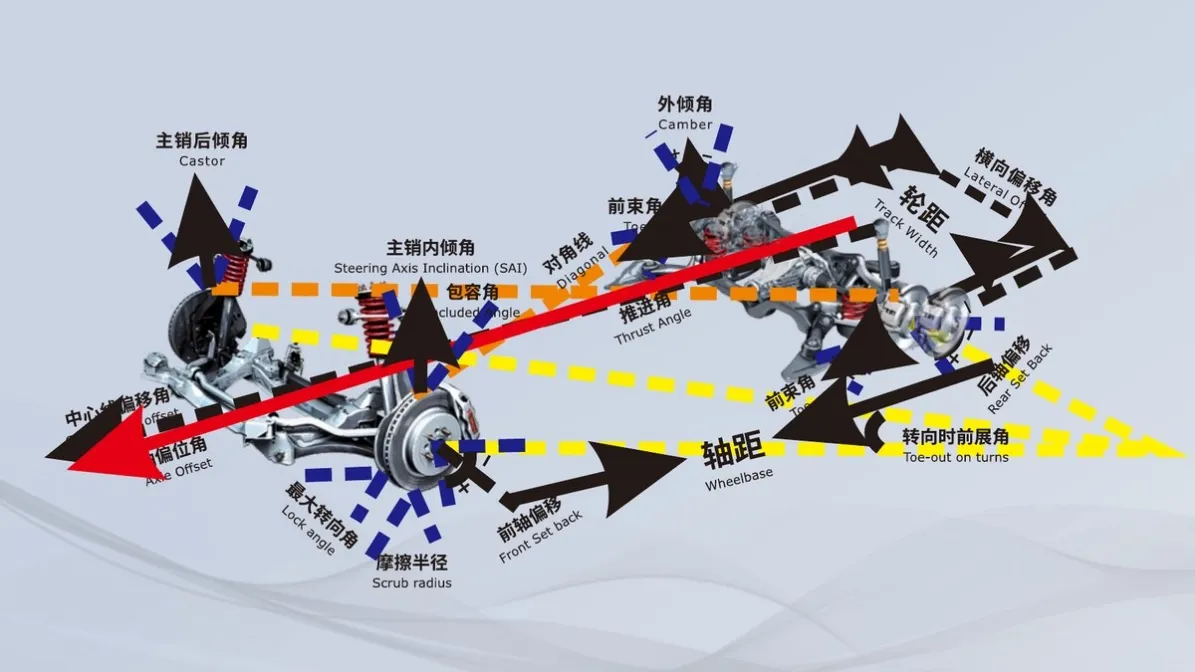
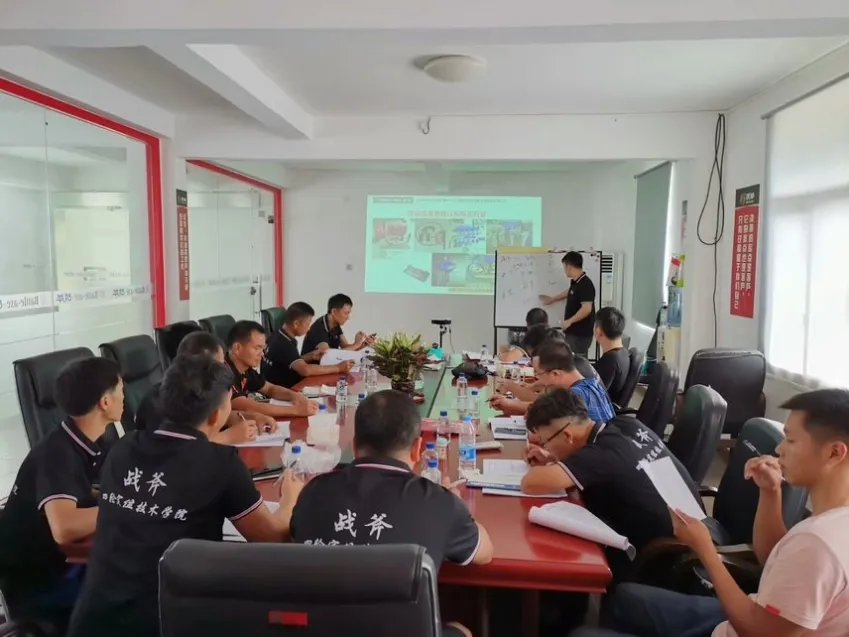
Every wheel alignment training course has to start in the same place: the angles. Camber, caster, toe, thrust angle — what each angle does, what happens to the car when it is off, and how it wears the tyres. Camber out of spec eats one edge of the tyre. Toe out of spec scrubs rubber off every kilometre and pulls the steering. Caster affects how the steering feels and whether the wheel comes back straight after a turn. Thrust angle decides whether the car drives straight or crabs sideways down the road. That is the foundation. Without it, the numbers on the screen mean nothing.
Then comes reading the data. The numbers the aligner gives you are not just red and green. They tell you whether the suspension is bent, whether a part is loose, or whether the angle has simply drifted over time. A bent strut shows up as camber with no adjustment left. A worn ball joint shows up as play in the readings. Data talks. The skill is understanding what it says — and that is what the classroom part of the course is for.
Can You Really Fix Rear Axle Data Without Breaking Parts?
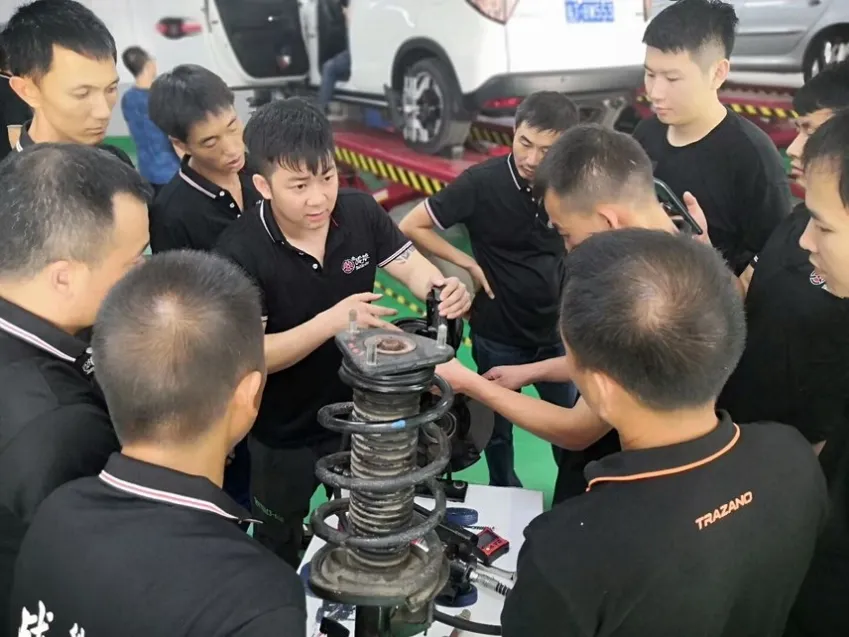
Then comes the hands-on part, and it is the part students remember. One of the core skills of this wheel alignment technician training is non-destructive correction of rear axle data: bringing drifted rear axle data back without breaking parts and without replacing parts that are still good.
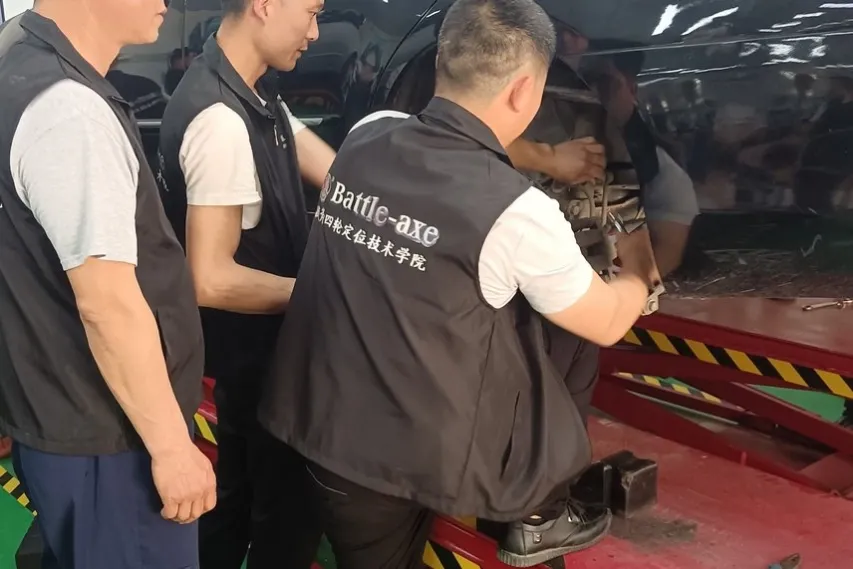
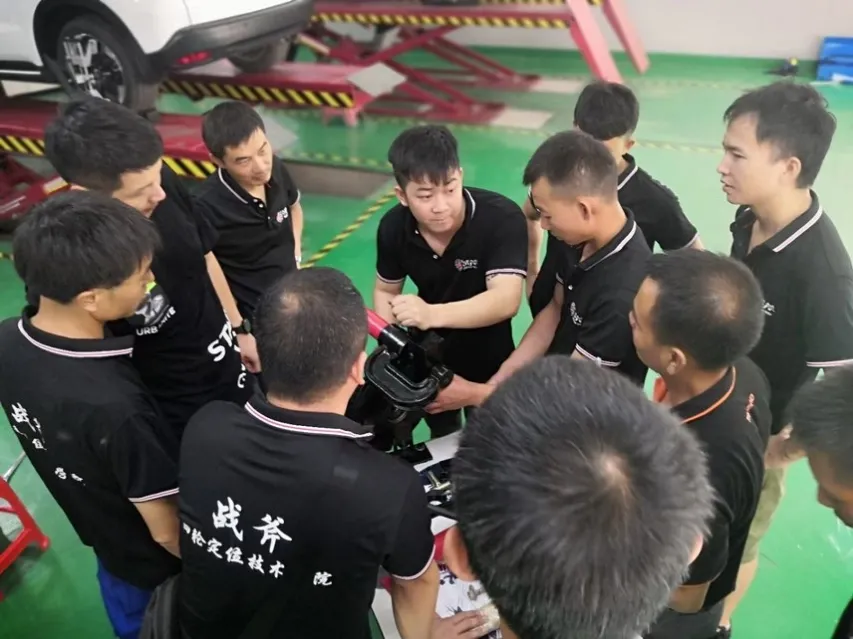
The practice happens in the workshop, on real cars on the lift. Struts, brake discs and suspension components are taken apart and put back together, with an instructor watching and correcting mistakes on the spot. It is chassis alignment training in the most direct sense — not a video, not a diagram, but your hands on the parts, with someone experienced standing next to you.
This kind of correction matters for a simple business reason: it saves the customer money on parts they do not need, and it saves the shop the cost of replacing components that still have life in them. A technician who can fix data without breaking parts is a technician customers trust — and a technician whose work stays profitable.
Working in a small group helps here too. When one student makes a mistake on the lift, the whole group sees it corrected, and nobody repeats it. That is the difference between car wheel alignment training done properly and a manual read alone in the office.
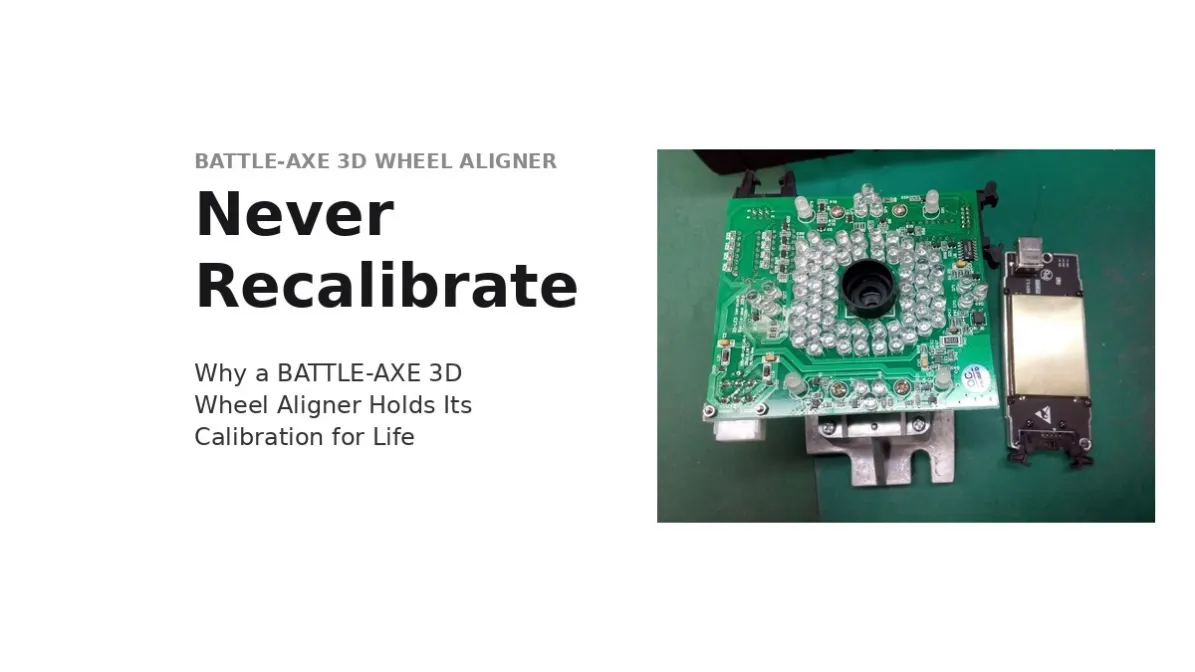
We teach this on machines that hold their own calibration, so the data students learn to read is data they can trust. Here is why a Battle-Axe 3D aligner never needs recalibration.
How Does Wheel Alignment Make a Workshop Money?
The lesson that matters most is the business lesson. The machine itself does not make money. Knowing how to use it does.
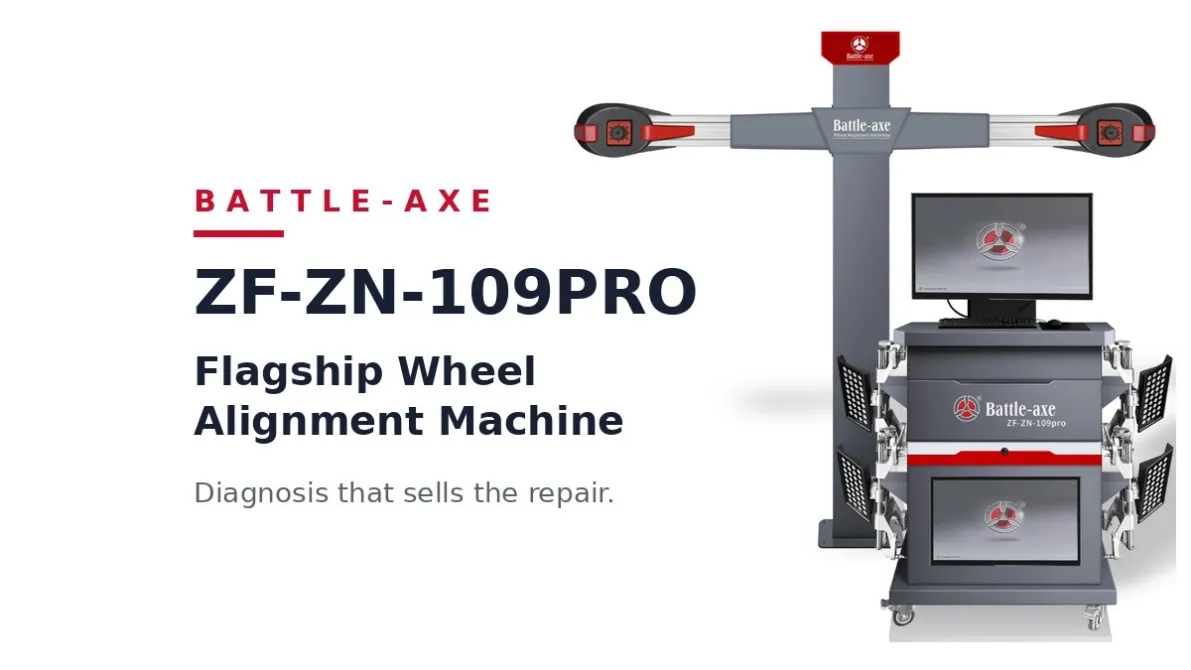
First, talking to the car owner. The numbers from the machine are more convincing than a technician's words. The owner reads the software and sees the problem for himself — no long explanation needed, no argument about whether the work is necessary. When a customer can see the data, the conversation changes from "trust me" to "look at this." That is true human-machine dialogue, and it is one of the reasons our flagship machine was built the way it was. The flagship machine our students train on is the ZF-ZN-109PRO — see what makes it our flagship wheel alignment machine.
Second, selling high-end alignment solutions. Not one adjustment, but a service that makes customers trust the shop and come back. Alignment becomes a charged diagnostic service, not a free add-on after a tyre change. The technician finds the problem, shows the data, fixes it, and the customer pays for a result they can see. Do that consistently and alignment turns into steady workshop revenue instead of an occasional job.
That is how a wheel alignment training course pays for itself. The technician goes back to the workshop and alignment stops being a chore the shop avoids. It becomes a service the shop is known for.
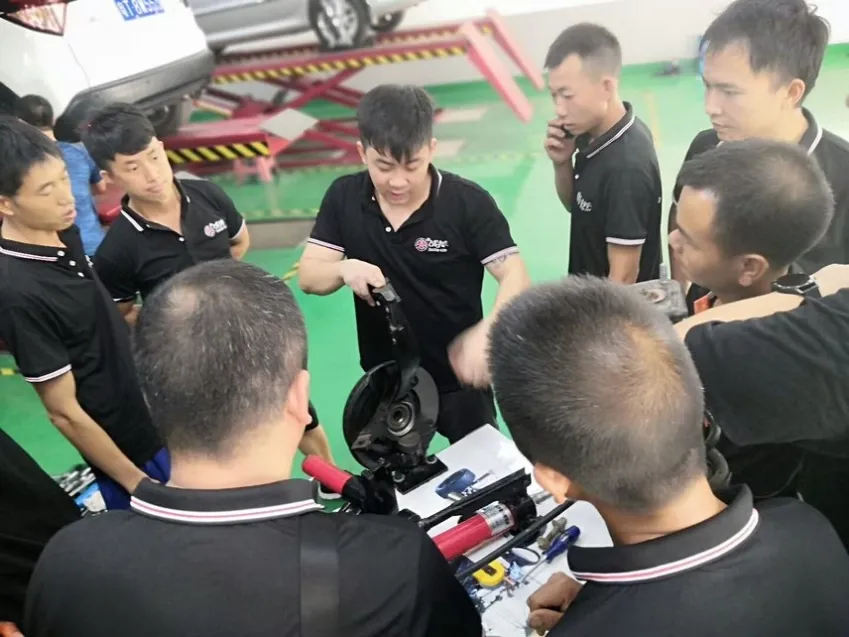
Here is what a recent session covered.
Who Can Join, and What Does It Cost?
Anyone who works in a repair shop can join. You do not need to own a Battle-Axe machine, and you do not need to be a distributor. Wheel alignment training for mechanics, wheel alignment training for tyre shops — the course is open to the whole trade, because the skills are the same whatever machine is in your workshop.
Sessions run once a month, with no more than 18 people per session, so the instructors can watch every student work. Small classes are the point: this is 3D wheel alignment training done shoulder to shoulder, not a lecture hall where nobody gets their hands on a car. Distributors are welcome to send their technicians too — a technician who can demonstrate alignment properly sells more machines than any brochure.
The fee is RMB 3,880 for Battle-Axe users and RMB 6,880 for everyone else. To book a seat or ask about the next session date, message us on WhatsApp.
FAQ
Q: How long is the course?
A: 3 days and 2 nights, with classroom theory and workshop practice.
Q: Where is the Academy?
A: At the BATTLE-AXE Academy training rooms in the Hairuida factory in Zhongshan, Guangdong. Theory and practice happen in the same place. This is wheel alignment training in China, at the factory where the machines are built.
Q: Do I need to own a Battle-Axe wheel aligner to attend?
A: No. The course is open to anyone working in a repair shop or tyre shop. Training is done on Battle-Axe 3D wheel aligners, and the skills apply to alignment work on any machine.
At BATTLE-AXE, we are not just developers, manufacturers, and sellers of wheel alignment equipment — we are also guides in the field of wheel alignment projects.
We hope our experience can inspire new ideas and help you gain a greater market share. If you want to join the next session of the Academy, or talk about how alignment can become a real profit line in your workshop, get in touch.
Jimmy Su | Zhongshan Hairuida
WhatsApp: +86 13016308510